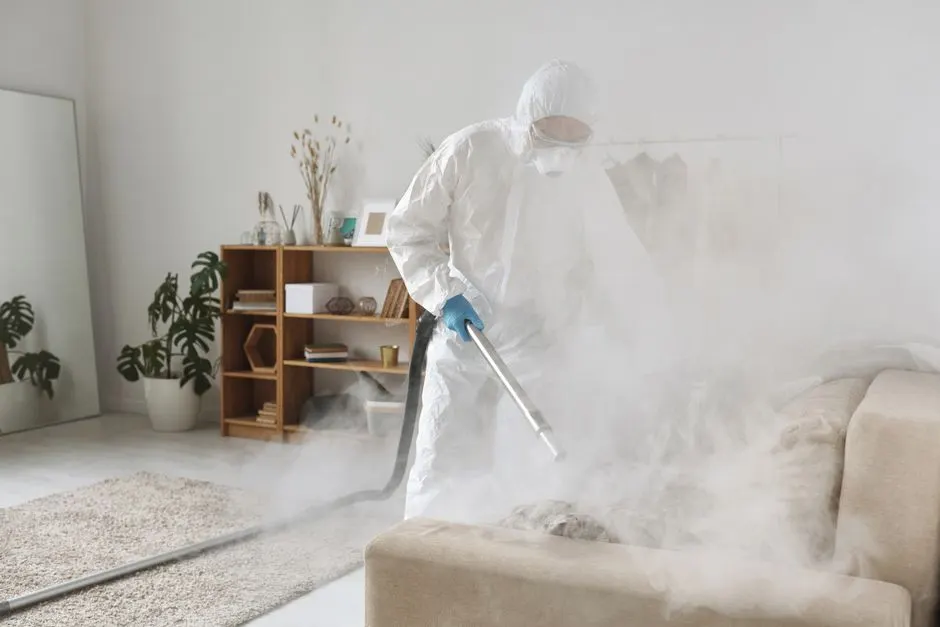
Camera Inspection And Report
We run a duct camera through the main trunk and at least four branch runs, show you the footage, and provide a written summary of conditions found. This is included, not a separate inspection fee.
Every job includes the full sequence: inspection, mechanical cleaning, antimicrobial treatment, and verification. We do not sell sanitizing as a standalone add-on, because spraying dirty ducts does nothing. Here is what is covered in the flat rate.
We run a duct camera through the main trunk and at least four branch runs, show you the footage, and provide a written summary of conditions found. This is included, not a separate inspection fee.
HEPA vacuum, rotary brush, air whip, and compressed air nozzle on every accessible run. We pull the blower assembly and clean it separately. This is the source removal step that makes the sanitizing effective.
Fogged through the entire duct interior at label dilution, with proper dwell time before the system is restarted. This is the step that kills mold spores, bacteria, and odor-causing organisms rather than just removing the debris they grow on.
The coil is the wettest surface in your HVAC system and the most common mold reservoir. We clean it with coil cleaner and sanitize the drain pan. Skipping this step is why some cleanings do not last.
A dryer vent lint clog is a fire hazard. We inspect the vent on every job and clear it with a rotary brush if needed, verifying airflow at the exterior hood before we leave.
We reseal every access hole with mastic and duct sealant, re-run the camera, and check static pressure. You get before-and-after photos and a written summary of the results.
Air duct sanitizing services in Braintree, Massachusetts is a mechanical cleaning plus chemical treatment process that removes mold growth, dust buildup, and pet dander from the inside of your HVAC ductwork, then applies an EPA-registered antimicrobial to the cleaned surfaces. We start with a HEPA vacuum and rotary brush on every trunk line and branch, pull the blower assembly, and finish with a fogger that reaches the last six inches of flex duct. It is not a spray-and-go job.
Most Braintree homes we open up were built between 1920 and 1970, and the original galvanized ductwork has been breathing basement moisture for decades. That is why duct sanitization Braintree homeowners call us for usually follows a specific pattern: musty odors in the fall, allergy flare-ups when the heat first runs, or a visible dust plume from the supply registers. If you have had water in the basement, mold growth in ducts is almost guaranteed.
Every job follows the same sequence. No shortcuts, no skipping the vacuum to get to the spray. Here is exactly what happens from the moment we pull up.
Schedule
Call or book online — a real human picks up and confirms a 2-hour arrival window.
Diagnose
Licensed tech inspects on-site, then walks you through the cause and your options.
Fix
The job is completed to code and done right the first time — no shortcuts, no surprises.
Guarantee
Every job backed by a written workmanship warranty — and we stand behind it.
Negative Air Machine
Puts the entire duct system under negative pressure during cleaning so disturbed debris is captured rather than released into your living space.
HEPA Vacuum
Captures fine dust, mold spores, and dander at 99.97 percent efficiency at 0.3 microns. This is the primary collection tool on every job.
Rotary Brush And Air Whip
Mechanical agitation that breaks loose the packed debris HEPA suction alone cannot move, especially in older galvanized trunk lines with pitted surfaces.
Duct Camera
Documents conditions before and after, locates mold growth, and finds disconnected or crushed flex runs that are invisible from the register.
Fogger
Distributes EPA-registered antimicrobial through the entire duct interior, reaching the last few inches of flex duct that a brush cannot touch.
Blower Door
Measures system leakage and helps us identify where duct sealant and mastic are needed to stop air loss before we sanitize.
Compressed Air Nozzle
Cleans the plenum and trunk line surfaces after brushing, pushing remaining debris into the negative air collection point.
NADCA Assessment, Cleaning and Restoration Standard
The industry standard for duct cleaning, which requires source removal rather than surface wiping, documented before-and-after conditions, and verification that the system is visibly clean. We follow it on every job, residential or commercial.
Negative Pressure Containment
We seal every register and connect a negative air machine to the main trunk before any cleaning begins. This keeps debris out of your living space and is the reason we can clean a finished basement without covering your furniture.
EPA-Registered Antimicrobial Application
Applied by fogger at label dilution with proper dwell time, then distributed through the running system to dry. This is the step that kills mold spores and bacteria rather than just removing the material they grow on.
Static Pressure Verification
We measure static pressure before and after cleaning to quantify airflow recovery. Most systems show a 10 to 15 percent improvement, which translates to shorter run times and more even temperatures.
01
What we do: We inspect the basement duct runs with a camera, contain the affected area, HEPA vacuum the growth, and fog the entire system with antimicrobial. If any flex duct is saturated, we replace it rather than treat it.
→ The musty odor is gone, the mold colony is dead, and you have documented footage showing the before and after for your insurance claim.
02
What we do: Post construction duct cleaning followed by sanitizing. We seal every register, run negative air, and pull the fine dust with HEPA vacuum and air whips before fogging the system.
→ You move back into a house that is not blowing construction dust through the bedrooms, and the new finishes stay cleaner longer.
03
What we do: Air duct cleaning for pet hair plus antimicrobial treatment. We pull the matted dander from the flex runs with rotary brushes, then sanitize to neutralize the proteins that trigger reactions.
→ Less dust on surfaces, fewer morning congestion episodes, and a return grille that stays clear for months instead of weeks.
04
What we do: We provide a standalone air duct inspection with camera footage and a written report, then quote the cleaning and sanitizing scope so you can negotiate before closing.
→ You know exactly what you are buying and what it will cost to fix, with documentation to support your request for a credit.
Braintree's housing stock is the biggest factor in how we approach duct sanitizing. Most of the homes we work in were built between 1920 and 1970, with original galvanized ductwork that has been exposed to basement humidity for decades. Those pitted surfaces hold mold growth far better than modern smooth-wall duct, which is why duct sanitization Braintree homeowners request so often follows a water event. The town's humid summers and freeze-thaw winters make basements damp in spring and dry in winter, and that cycle stresses every joint and seam. We also see a lot of flex duct added during renovations, and flex is porous, so once mold establishes in it, replacement is usually the right call rather than treatment. If you have had water in the basement, call us before the next heating season. Air duct sanitizing after mold Braintree jobs are best done in the fall, before the system runs daily and distributes spores through the house all winter. We schedule those calls first from September through November.
Braintree Center
Older colonials and capes with original galvanized trunk lines. Basement humidity is the main driver of mold growth in these systems.
Braintree Highlands
Mix of mid-century ranches and newer construction. We see more flex duct here, which means more replacement work when contamination is found.
South Braintree
Denser housing with more shared-wall construction. Duct runs are shorter, so jobs go faster, but contamination spreads between units more easily.
Five Corners
Multi-unit buildings with shared trunk lines. We coordinate with property management and document conditions for landlord records.
Skyline Park
Newer construction with smooth-wall duct and tighter envelopes. These systems stay cleaner longer, but construction dust is a common issue after renovations.
Humid summers and damp basements
Basement duct runs absorb moisture from June through September, which feeds mold growth. Fall is the best time to sanitize before the heating season distributes spores.
Pre-1978 housing stock
Older galvanized duct has pitted surfaces that hold contamination. We use EPA Lead-Safe Certified practices when working in these homes, especially around any disturbed paint.
Freeze-thaw winters
Temperature cycling stresses duct joints and seams, opening gaps that let basement air into the system. We check and reseal these during every sanitizing job.
Post-storm water intrusion
Spring nor'easters and summer thunderstorms push water into basements. Mold can establish in ductwork within 48 hours, so we prioritize same-day response for these calls.
Most duct problems announce themselves the same way: a smell, a dust plume, or a symptom that will not go away. Here is what we find most often and how we fix it.
Problem
That smell is active microbial growth, not dust. Left alone, the colony spreads through the trunk line and into every branch run, and the odor gets stronger each season.
Our Fix
We locate the growth with a duct camera, HEPA vacuum the affected runs, and fog the entire system with EPA-registered antimicrobial. The smell is usually gone the same day. If the growth is in porous flex duct, we replace that section rather than treat it.
Problem
Visible dust means the return drop and trunk line are packed with debris. Your blower is pulling that dust through the coil and pushing it into every room you breathe in.
Our Fix
Full mechanical cleaning with a rotary brush and air whip removes the packed debris from the trunk and branches. We measure static pressure before and after, and most systems recover 10 to 15 percent of lost airflow. Then we sanitize to prevent regrowth.
Problem
Pet dander accumulation and mold spores in the ductwork keep triggering reactions no matter how much you clean the house. The reservoir is inside the system, not on the furniture.
Our Fix
We prioritize the bedroom and living-area runs, use HEPA filtration throughout the job, and apply antimicrobial to reduce the allergen load. Air duct sanitizing for allergies Braintree MA customers typically notice less morning congestion within the first week.
Problem
Restricted airflow makes your blower run longer to reach setpoint. That shows up as higher electric bills and uneven room temperatures, especially in second-floor bedrooms.
Our Fix
Cleaning and sanitizing the ductwork restores airflow, and cleaning the evaporator coil improves heat transfer. Together, those two steps reduce run time. We document the static pressure change so you can see the improvement in numbers.

The dust you see on the coffee table is only part of it. What matters is what you cannot see: spores, dander, and bacteria cycling through every room six to eight times a day.
Breathing Easier By Morning
Air duct sanitizing for allergies Braintree MA households report fewer morning congestion episodes within the first week. We remove the settled dander and mold spores that trigger reactions, then treat the surfaces so new growth cannot take hold. If someone in your house wakes up sneezing every day, the bedroom supply run is usually the culprit.
Killing Musty Odors
Musty odors come from active microbial growth, not dust. A HEPA vacuum alone will not stop it. Our antimicrobial spray penetrates the porous lining of flex duct and the pitted surface of old galvanized runs, killing the colony instead of just knocking it loose. Most customers notice the smell is gone the same day.
Restoring HVAC Airflow
When dust and lint pack the return drop, your blower works harder and your rooms never quite reach temperature. We measure static pressure before and after. A clean, sanitized system typically recovers 10 to 15 percent of lost airflow, which shows up as shorter run times and lower electric bills through the winter.
Protecting Your Equipment
Dirty ducts send grit straight into the evaporator coil and blower motor. That is what kills compressors early. Sanitizing the ductwork and cleaning the coil together adds years to the system. We have pulled coils that were 60 percent blocked by lint on systems less than eight years old.
Google ★★★★★4.9
Showed me the camera footage before quoting anything. Found mold in the trunk line from a basement flood and had it cleaned and fogged the same day. Flat rate, no surprises. The musty smell was gone that night.
Google ★★★★★5.0
Three pets and a kid with asthma. They pulled an unbelievable amount of hair out of the return duct and sanitized everything. Four months later the dust on the furniture is way down and my son is not congested every morning.
Yelp ★★★★★4.8
Managed a commercial job for our dental office. They provided before-and-after footage and a written report that satisfied the board of health. Worked around our patient hours and finished in one day.
BBB ★★★★★4.9
Called on a Saturday after finding water in the basement. They answered, scheduled for Monday morning, and documented everything for our insurance claim. Professional crew, clean work, no mess left behind.
ServantaCore has been sanitizing ductwork in Braintree since 2022. In that time we have cleaned and treated more than 900 residential systems and roughly 60 commercial spaces across the South Shore. Our lead technicians hold NADCA Certified credentials and carry Massachusetts HVAC License coverage, with OSHA 10 training for every crew member who enters a job site. We follow NADCA's Assessment, Cleaning and Restoration standard on every job, which means we document conditions before and after rather than just handing you an invoice. We also hold IICRC Certified status for restoration work, which matters when we are dealing with post-flood mold in a basement duct system.
Real answers to the questions we hear most often from local homeowners and property managers.
Mechanical cleaning is step one of sanitizing. We pull debris with a HEPA vacuum and rotary brush before any antimicrobial goes in, so the treatment actually reaches the duct surface instead of sitting on top of dust.
View local Airduct cleaningIf you are in Braintree Center, South Braintree, or the Highlands, our trucks are usually within 20 minutes. We schedule same-week appointments for standard cleaning and can often pair it with sanitizing on the same visit.
View Airduct cleaning near meWater in the basement at 2 a.m. means mold starts growing in your ducts within 48 hours. Our 24/7 line handles emergency calls so we can get drying equipment and cleaning started before the colony establishes.
View 24/7 Airduct cleaningCall before noon and we can usually have a crew at your Braintree address the same afternoon. Same-day slots are reserved for post-flood, post-construction, and real estate closing situations where timing matters.
View Same Day Airduct cleaningSewage backup, burst pipe, or fire suppression water in the ductwork requires immediate extraction and antimicrobial treatment. We carry the equipment on the truck and can start remediation the same day you call.
View Emergency Airduct cleaningRestaurants, dental offices, and retail spaces along the South Shore Plaza Area need documented duct cleaning for health inspections. We provide before-and-after camera footage and written reports that satisfy board of health requirements.
View commercial Airduct cleaningCall (844) 803-2151 and a real person answers, not a call center. We book same-day slots most weeks and keep a 24/7 line open for emergency air duct cleaning Braintree near me calls. If you prefer email, send photos of your vents or your dryer vent run to info@servantacore.com and we will reply with a straight answer.
Phone
(844) 803-2151Address
100 Grossman Dr, Braintree, MA 02184, USA, Braintree, Massachusetts
Hours
Mon–Fri: 7AM – 7PM
Sat: 8AM – 4PM
Sun: Emergency Only
24/7 Emergency Available